
Blog
44 345 300 2752: Who Called From This Number in 2026?



Voddler.co.uk is a search term that can be confusing because the Voddler name has two distinct modern and historical associations. The original Voddler was a Swedish video-on-demand company that became known for online movie streaming and its Vnet technology. The current Voddler.co.uk domain, however, appears primarily as a digital publication covering entertainment, streaming, technology, gaming, sports, apps, anime, and related online topics.
Understanding this difference is essential. Older information about Voddler can easily be mistaken for information about the present website. The original Voddler service is no longer operating, while the current domain is being used for informational and editorial content. At the same time, some pages associated with the Voddler name describe streaming functionality, which makes checking the exact website and its current purpose especially important.
What Is Voddler.co.uk in 2026?
In 2026, Voddler.co.uk is best understood as an entertainment and technology-focused content website rather than simply assuming that it is the same streaming company that operated years ago.
The current domain publishes articles across categories such as Apps, Gaming, Movies, Sports, Anime, and Blog, with additional articles addressing wider technology and online-service topics. Its homepage includes recent 2026 articles covering subjects ranging from digital services to entertainment and sports.
Some third-party descriptions similarly characterize the current site as an informational website that helps readers research streaming, movies, anime, gaming, sports, software, and other digital subjects.
This means visitors should not automatically expect a Netflix-style interface with a current Voddler-owned movie catalogue. The available evidence instead points toward a content and information model, where users read guides and articles about digital entertainment and technology.
Voddler.co.uk and the Original Voddler Streaming Service
The history behind the Voddler name is important because it explains why people continue searching for it.
The original Voddler was a Swedish video-on-demand service that emerged during the early development of legal internet streaming. It offered users a way to access movies and other video content online, making the brand part of the early European streaming landscape.
The original company also developed Vnet, a technology associated with its approach to distributing video content. As the streaming market changed, Voddler faced significant challenges involving content licensing, competition, technology costs, and the economics of operating an online video platform.
The company underwent restructuring in 2015 and increasingly focused on its underlying technology. Eventually, Voddler Group entered bankruptcy in January 2018.
Consequently, historical articles about Voddler’s movie catalogue, business model, applications, or Vnet technology should not automatically be interpreted as descriptions of the current Voddler.co.uk website.
What Content Does Voddler.co.uk Cover?
The current website has a broad digital-entertainment focus. Instead of limiting itself to one type of media, it publishes material covering several areas of online culture and technology.
Common topics include:
- Streaming and online entertainment
- Movies and television
- Anime
- Sports streaming
- Gaming
- Mobile and web apps
- Software
- Technology
- Digital trends
- Online services
The site’s category structure includes Movies, Sports, Anime, Gaming, Apps, and Blog, while individual articles extend into broader technology topics.
This makes Voddler.co.uk potentially useful for readers who want information about different digital entertainment services in one place. Rather than focusing solely on movie reviews, it can also discuss streaming alternatives, gaming platforms, software, and other online tools.
However, information about third-party services can become outdated quickly. A streaming website may change its domain, pricing, availability, licensing arrangements, or business model. Therefore, we should always verify important details directly with the service being discussed.
Can We Watch Movies Directly on Voddler.co.uk?
This is one of the most important questions surrounding Voddler.co.uk.
The current website does not appear to function in the same way as the original Voddler streaming service. Recent examinations describe the current site primarily as an informational publication and report no obvious Netflix-style catalogue or current Voddler subscription system.
Some pages connected with the Voddler name use language associated with streaming, movies, and television. For example, an About page describes Voddler as a destination for streaming entertainment and discusses a library of movies and television content.
Because these descriptions are not entirely consistent with the current editorial homepage, we should verify what functionality is actually available before assuming that Voddler.co.uk provides direct streaming.
The safest interpretation is that the current domain primarily provides information about entertainment and digital services, rather than treating it as a confirmed replacement for the historical Voddler streaming platform.
Is Voddler.co.uk Safe and Legitimate?
Safety assessments of Voddler.co.uk are not completely consistent, so we should avoid making an absolute claim based on a single automated rating.
The website is publicly accessible and contains identifiable articles, categories, and standard pages. It has published material during 2026, indicating ongoing activity.
However, at least one automated reputation service currently gives the domain a very low trust assessment, categorizing it as high-risk based on its own algorithm and multiple technical factors.
An automated score should not by itself establish that a website is fraudulent. At the same time, such a warning should not be ignored.
When visiting an unfamiliar entertainment website, we should follow basic security practices:
- Check the exact URL before entering information.
- Avoid downloading unknown files.
- Do not provide payment details unless the transaction is clearly verified.
- Be cautious with unexpected redirects and pop-ups.
- Review privacy and contact information.
- Avoid entering passwords that are reused on other websites.
- Independently verify third-party streaming services mentioned in articles.
These precautions are particularly important when a website discusses external entertainment platforms or streaming alternatives.
Voddler.co.uk, Streaming Alternatives, and Digital Entertainment
A significant part of the website’s subject matter involves streaming alternatives and online entertainment. Older articles associated with the domain discuss services for sports and movies, while newer material has expanded into technology, gaming, apps, and digital trends.
Readers should remember that an article discussing a third-party streaming service does not necessarily mean that Voddler.co.uk operates or endorses that service.
The legal availability of movies, television programs, sports broadcasts, and anime differs by country. Licensing agreements can also change over time. A service available in one region may not be available in another.
For that reason, we should use Voddler.co.uk articles as starting points for research and then verify the current status of any external platform through its official website, applicable licensing information, and current terms.
For direct viewing, established legitimate streaming services remain the appropriate place to check whether a particular title is officially available in a given country.
Frequently Asked Questions About Voddler.co.uk
What is Voddler.co.uk?
Voddler.co.uk is currently associated with digital entertainment and technology content, including articles about movies, streaming, anime, sports, gaming, apps, and software.
Is Voddler.co.uk the original Voddler streaming service?
There is no clear evidence establishing that the current UK website is the same operating company as the original Swedish Voddler service. The historical Voddler Group entered bankruptcy in 2018.
Does Voddler still stream movies?
The historical Voddler streaming service is no longer operating. The current Voddler.co.uk website primarily appears to publish informational content rather than operate the original Voddler movie catalogue.
What topics does Voddler.co.uk cover?
Its visible categories include Movies, Sports, Anime, Gaming, Apps, and Blog, with additional technology and digital-entertainment articles.
Is Voddler.co.uk safe?
The available assessments are mixed. The site is active and publicly accessible, but at least one automated reputation service currently assigns it a low trust score. We should therefore use normal online-security precautions and independently verify services mentioned on the website.
What happened to the original Voddler?
The original Swedish Voddler business faced increasing competition and commercial challenges, restructured its operations, and eventually entered bankruptcy in January 2018.
Final Thoughts on Voddler.co.uk in 2026
Voddler.co.uk is best understood by separating the current website from the historical Voddler streaming company. The original Voddler was an early Swedish video-on-demand service that experimented with legal online movie streaming and developed Vnet technology. That business ultimately entered bankruptcy in 2018.
The current Voddler.co.uk presents a different picture. Its visible website contains editorial material about streaming, movies, anime, sports, gaming, apps, software, and technology, making it primarily an information-oriented digital publication.
Because some online descriptions portray the domain as a streaming service while others describe it as an informational website, we should verify its current functionality directly rather than relying on the historical Voddler brand name.
For anyone researching Voddler.co.uk in 2026, the key distinction is simple: the old Voddler streaming service and the current Voddler.co.uk website should not automatically be treated as the same entity. Checking the exact domain, current site structure, published content, privacy information, and security indicators provides a more reliable understanding of what the website offers today.
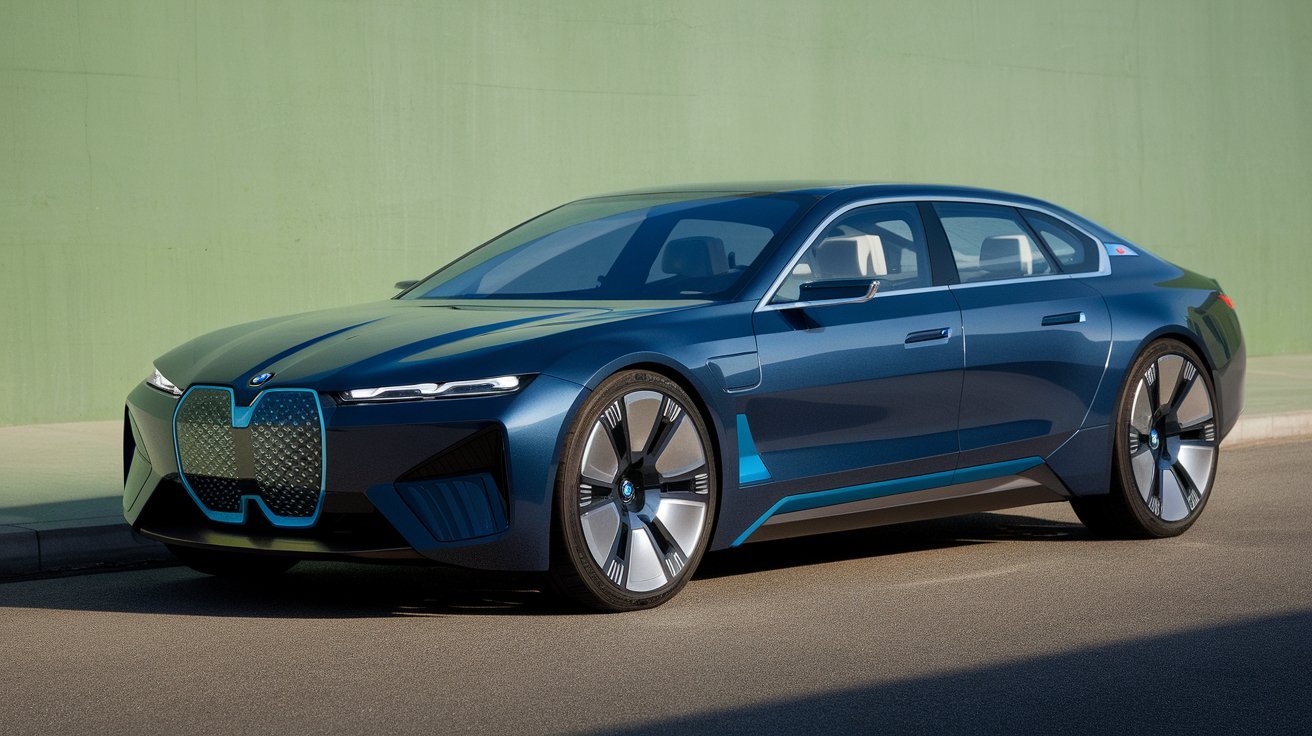
The BMW 3 Series 2025 continues BMW’s long-running tradition of combining sporty driving dynamics, premium comfort, advanced technology, and everyday practicality in a compact luxury sedan. For the 2025 model year, BMW made several targeted updates rather than completely redesigning the car. The lineup focuses on the 330i and M340i, with both models receiving modernized technology and mild-hybrid assistance. The M340i also receives a significant power and torque increase compared with the previous model year.
The 2025 BMW 3 Series remains part of the seventh-generation model introduced for 2019. It competes with vehicles such as the Mercedes-Benz C-Class, Audi A5, Genesis G70, and Lexus IS. With its combination of performance, luxury, fuel efficiency, and technology, the 3 Series continues to serve drivers looking for a sedan that can work equally well as a daily commuter and an engaging driver’s car.
What Is New on the BMW 3 Series 2025?
The BMW 3 Series 2025 receives a collection of updates designed to keep the sedan competitive without changing its fundamental character. The exterior receives revised styling details, while the interior gets updates to the infotainment software and trim-related elements. BMW also made changes to the powertrain technology, particularly on the M340i.
One of the most important changes is the continued use of 48-volt mild-hybrid technology across the 2025 lineup. The M340i’s updated system contributes to higher output, with the turbocharged inline-six producing 386 horsepower and 398 lb-ft of torque. The 330i retains its 255 horsepower turbocharged four-cylinder engine while torque increases slightly to 295 lb-ft.
Another major change is the removal of the 330e plug-in hybrid from the 2025 U.S. lineup. This leaves buyers primarily choosing between the four-cylinder 330i and the six-cylinder M340i. Both can be configured with rear-wheel drive, while xDrive all-wheel drive is available on applicable versions.
BMW 3 Series 2025 Engine and Performance
Performance is one of the strongest reasons buyers consider a BMW 3 Series. The 2025 330i uses a 2.0-liter turbocharged four-cylinder engine paired with an eight-speed automatic transmission. It produces 255 horsepower and 295 lb-ft of torque, giving the sedan enough power for daily driving while maintaining relatively strong fuel economy.
The more performance-focused M340i uses a 3.0-liter turbocharged inline-six with 48-volt mild-hybrid assistance. It develops 386 horsepower and 398 lb-ft of torque and uses an eight-speed automatic transmission. BMW lists a manufacturer-estimated 0–60 mph time of approximately 4.4 seconds for the rear-wheel-drive M340i, while the M340i xDrive is listed at approximately 4.1 seconds.
The 330i is also surprisingly quick. Car and Driver recorded 5.2 seconds from 0 to 60 mph for an all-wheel-drive 330i test vehicle, while its testing of the M340i xDrive produced a rapid 3.7-second result. These independent test figures can vary depending on vehicle configuration and testing conditions.
Both versions use an eight-speed automatic transmission, and BMW offers rear-wheel drive or xDrive all-wheel drive depending on configuration. The combination provides a balance between comfortable highway cruising and responsive handling.
Exterior Design and Interior Features
The 2025 BMW 3 Series retains the recognizable proportions of the current generation while receiving subtle exterior revisions. Updated bumpers and available exterior colors give the sedan a fresher appearance. Buyers can also select sportier wheel designs, including available 19-inch M alloy wheels on appropriately equipped models.
Inside, the 3 Series combines a driver-focused layout with contemporary digital technology. The cabin uses BMW’s curved display arrangement for the instrument cluster and infotainment functions, while updated software provides redesigned menu layouts. Available technology can include navigation, smartphone connectivity, parking assistance, and advanced driver-assistance functions.
The sedan also remains practical for its class. The 2025 3 Series provides seating for five people and approximately 16.9 cubic feet of cargo space. Its 112.2-inch wheelbase contributes to usable passenger space while maintaining the relatively compact footprint expected from a sports sedan.
The interior is particularly suited to drivers who want a balance between luxury and sportiness. Depending on configuration, buyers can choose different upholstery, trim, seats, suspension settings, wheels, and M Sport equipment.
BMW 3 Series 2025 Fuel Economy and Dimensions
Fuel efficiency varies according to engine and drivetrain. According to current specifications, the rear-wheel-drive 330i is rated at approximately 28 mpg city and 35 mpg highway, with a 31 mpg combined figure. The 330i xDrive is rated lower, at approximately 26 mpg city and 34 mpg highway.
The M340i also combines strong performance with reasonable fuel economy for a six-cylinder sports sedan. Its rear-wheel-drive version is listed at approximately 27 mpg city and 33 mpg highway, with a 29 mpg combined rating.
The BMW 3 Series is approximately 185.9 inches long and 71.9 inches wide, excluding mirrors, with a wheelbase of roughly 112.2 inches. The 330i has a listed curb weight of about 3,644 pounds in rear-wheel-drive specification, while drivetrain and equipment can increase weight.
These dimensions make the 3 Series relatively easy to maneuver in urban environments while providing enough interior and cargo space for everyday use.
BMW 3 Series 2025 Price and Trim Choices
The 2025 BMW 3 Series lineup is centered around the 330i and M340i. Edmunds lists a starting MSRP of $45,950 for the 330i and approximately $60,200 for the M340i, while xDrive and additional equipment increase the price. Actual transaction prices can vary according to destination charges, options, dealer pricing, incentives, and market conditions.
The 330i is designed for buyers who want the core BMW experience with a four-cylinder engine, while the M340i targets drivers looking for substantially stronger acceleration and the character of a turbocharged inline-six.
Available packages can significantly change the final cost. Buyers should therefore compare the standard equipment and optional packages rather than looking only at the base MSRP. Driver-assistance technology is another area where equipment can vary by configuration. Edmunds notes that some of the 3 Series’ advanced driver-assistance features are optional rather than standard.
Is the BMW 3 Series 2025 a Good Luxury Sedan?
The BMW 3 Series 2025 continues to occupy an important position among compact luxury sedans because it combines several characteristics in one vehicle. The 330i offers strong everyday performance and fuel economy, while the M340i provides considerably greater performance without becoming a dedicated two-seat sports car.
Its strengths include responsive handling, powerful engines, premium interior quality, modern technology, comfortable front seating, and practical trunk space. The eight-speed automatic transmission also contributes to its ability to operate smoothly in everyday traffic while responding quickly during spirited driving.
However, prospective owners should also consider the vehicle’s options and running costs. A highly equipped 3 Series can become substantially more expensive than its base price, and some driver-assistance features require additional equipment. The ride can also feel firm with sport-oriented configurations and larger wheels.
Ultimately, the 2025 3 Series is designed for drivers who want a luxury sedan with genuine driving performance rather than simply a comfortable transportation vehicle. Its two primary powertrains allow buyers to choose between efficiency and affordability in the 330i or significantly stronger performance in the M340i.
Frequently Asked Questions About BMW 3 Series 2025
What engine does the 2025 BMW 330i have?
The 330i uses a 2.0-liter turbocharged four-cylinder engine producing 255 horsepower and 295 lb-ft of torque, paired with an eight-speed automatic transmission.
How much horsepower does the 2025 BMW M340i have?
The 2025 M340i produces 386 horsepower and 398 lb-ft of torque from its 3.0-liter turbocharged inline-six with mild-hybrid assistance.
Does the 2025 BMW 3 Series have all-wheel drive?
Yes. xDrive all-wheel drive is available on applicable 330i and M340i configurations, while rear-wheel drive is also offered.
How much cargo space does the 2025 BMW 3 Series have?
The sedan provides approximately 16.9 cubic feet of trunk space, giving it useful capacity for luggage and everyday cargo.
Is the 330e available for 2025?
The 330e plug-in hybrid is no longer part of the 2025 U.S. 3 Series lineup, leaving the 330i and M340i as the primary sedan choices.
What makes the BMW 3 Series 2025 different from competitors?
The 3 Series emphasizes a combination of sporty handling, premium cabin quality, powerful engines, modern technology, and daily usability. Its available six-cylinder M340i also gives buyers a performance-oriented alternative without moving to the more specialized M3.
Conclusion
The BMW 3 Series 2025 continues BMW’s established formula of blending luxury and performance into a practical sedan. Its updated styling, improved infotainment, mild-hybrid technology, efficient 330i engine, and powerful M340i inline-six make the lineup versatile for different types of drivers. With 255 horsepower in the 330i and 386 horsepower in the M340i, buyers can select a configuration that matches their priorities for efficiency, comfort, or performance.
For 2025, the 3 Series remains a technologically advanced and performance-focused compact luxury sedan. Understanding the trim levels, drivetrain options, available packages, fuel economy, and total purchase price is important before choosing a specific configuration. Whether selected as a 330i for everyday use or an M340i for stronger performance, the 2025 BMW 3 Series remains an important entry in the modern luxury-sedan market.

Takashi Morinozuka, better known as Mori, is one of the most recognizable members of the Ouran Host Club in Bisco Hatori’s Ouran High School Host Club. His quiet personality, impressive physical abilities, loyalty, and close relationship with Mitsukuni “Honey” Haninozuka make him an important supporting character despite his relatively reserved presence.
Mori is introduced as a third-year student at Ouran Academy and one of the senior members of the Host Club. Character databases list him at 192 cm (6 ft 4 in), with his birthday on May 5. The manga and anime differ somewhat in his stated age: he is 18 in the manga material and 17 in the anime.
Who Is Takashi Morinozuka?
Takashi Morinozuka is a fictional character from Ouran High School Host Club, the manga created by Bisco Hatori and its anime adaptation. He is commonly called Mori, a nickname that reflects his quiet and understated nature.
Within the Host Club, Mori is characterized by his calm, serious presence. Unlike some of the more talkative members, he generally speaks only when he has something important to say. His reserved personality initially makes him appear intimidating, but his actions reveal a considerate and protective side.
Mori is particularly close to his cousin Mitsukuni “Honey” Haninozuka. Their relationship is one of the central aspects of Mori’s character. The Morinozuka family historically served and protected the Haninozuka family, although the families became related through marriage generations earlier, ending the traditional master-servant relationship. Mori nevertheless continues to look after Honey and remains his closest companion.
Takashi Morinozuka’s Personality
Mori’s personality is defined by silence, discipline, loyalty, and composure. He is often described as the Host Club’s strong and silent or stoic type. His limited dialogue makes his actions particularly important when understanding his character.
Although his tall stature and serious expression can make him seem intimidating, Mori is generally portrayed as gentle and dependable. He is protective of the people around him and frequently demonstrates concern through actions rather than lengthy conversations.
His relationship with Honey illustrates this especially well. Mori is often nearby when Honey needs assistance, and his loyalty continues even though the historical servant-master relationship between their families no longer formally exists.
Mori’s personality also provides a contrast to the louder personalities in the Host Club. Tamaki, the twins, Kyoya, and Honey each bring different forms of energy to the group, while Mori contributes stability and physical presence.
Mori and Honey’s Relationship
The relationship between Mori and Honey is arguably the most important personal connection in Takashi’s story. They are cousins, close friends, and longtime companions.
The Morinozuka and Haninozuka families have a complicated history. According to character information, the Morinozuka family traditionally protected and served the Haninozuka family. A marriage between the families eventually made the two families relatives and ended the formal master-servant arrangement. Despite this change, Mori maintains a strong sense of responsibility toward Honey.
Honey’s cheerful and playful personality contrasts sharply with Mori’s serious demeanor. This difference makes them an effective pair within the Host Club. Honey is energetic and expressive, whereas Mori tends to communicate through calm actions.
Mori is also one of the few characters who consistently treats Honey according to his actual personality rather than simply reacting to his childlike appearance. Their relationship demonstrates trust that has developed over many years.
Mori’s Martial Arts Abilities
Physical skill is another major part of Takashi Morinozuka’s character. He is highly accomplished in kendo and is described as a national champion. He also possesses considerable skill in karate and other martial arts.
His martial-arts background explains why other characters recognize him as one of the physically strongest members of the Host Club. His abilities also contribute to his reputation as someone who can protect others when necessary.
Importantly, Mori’s strength is not presented as his entire personality. His physical abilities work alongside his disciplined temperament. He rarely seeks attention because of his skills, and his quiet confidence contrasts with characters who are more openly dramatic.
The combination of martial-arts expertise and a calm personality is therefore central to his characterization.
Takashi Morinozuka at Ouran Academy
Mori attends Ouran Academy, the elite school where the story takes place. He is a third-year student during the main school storyline and is one of the senior members of the Host Club.
The Host Club itself operates from the school’s Third Music Room and is led by Tamaki Suoh. Each member represents a particular personality archetype designed to appeal to the club’s customers. Mori’s role is associated with his quiet, dependable, physically imposing image.
Despite spending much of his time with the Host Club, Mori is not portrayed as someone who constantly seeks the spotlight. His importance comes from his relationships with the other characters and his reliability during situations involving the club.
His academic interests are also mentioned in character information, including geography and Japanese history. These details add another dimension to a character who otherwise receives much of his attention through his physical abilities and reserved behavior.
Mori’s Role in the Ouran Host Club
Within the Host Club, Mori’s purpose goes beyond simply entertaining visitors. He contributes to the club’s group dynamic and acts as a stabilizing presence.
The club contains several contrasting personalities. Tamaki is theatrical and emotional, Kyoya is analytical, the Hitachiin twins are mischievous, Honey is cheerful, and Haruhi provides a grounded perspective. Mori’s quiet temperament helps balance the group.
His relationship with Honey is particularly important to the club’s identity. The two frequently appear together, and their contrasting personalities became one of the recognizable pairings within the series. Mori’s protective nature also contributes to his reputation among classmates.
Because he does not speak frequently, individual moments involving Mori can carry more weight. A short statement or simple action can communicate concern, loyalty, humor, or seriousness without requiring a long conversation.
Takashi Morinozuka in the Manga and Anime
Mori appears in both the Ouran High School Host Club manga and anime adaptation. His manga debut is in Chapter 1, while his anime debut occurs in Episode 1, “Starting Today, You Are a Host!”
The anime adaptation presents Mori’s quiet nature prominently, while the manga provides additional details about his life, interests, relationships, and development. Character information also indicates that his story extends beyond high school in the manga, including university and later stages of his life.
His Japanese voice was performed by Daisuke Kirii, while Travis Willingham provided his English voice in the anime.
The character has also remained recognizable among fans years after the original anime. In 2026, Mori-related merchandise and Ouran High School Host Club collaboration products continue to appear, including a Takashi Morinozuka acrylic stand associated with the series’ “Bouquet For You!” merchandise.
Why Takashi Morinozuka Remains Popular
Takashi Morinozuka stands out because his characterization relies heavily on subtlety rather than constant dialogue. His tall stature, martial-arts expertise, serious expression, and quiet behavior initially create an intimidating impression, but his loyalty and kindness reveal a more thoughtful character.
His friendship and family bond with Honey provide much of his emotional depth. At the same time, his interactions with the wider Host Club demonstrate that he is dependable and respected by the other students.
The contrast between Mori’s stoicism and Honey’s cheerful personality has become one of the defining elements of their characters. Mori’s appeal therefore comes not simply from being physically strong but from the combination of strength, restraint, loyalty, and kindness.
Conclusion
Takashi Morinozuka, or Mori, is an important character in Ouran High School Host Club. As a third-year Ouran Academy student and member of the Host Club, he is known for his quiet personality, impressive martial-arts abilities, and unwavering loyalty to his cousin and best friend, Honey.
His role demonstrates how a character can have a significant presence without being highly talkative. Mori’s relationship with Honey, his position within the Host Club, and his disciplined personality make him an enduring part of the series’ ensemble. His continued appearance in 2026 merchandise and fan discussions also demonstrates the lasting recognition of the character among Ouran High School Host Club audiences.

Golden State Warriors vs Utah Jazz Match Player Stats 2026: Complete Box Score and Game Analysis

Voddler.co.uk: Complete Guide to the Website, Streaming History, Content, and Safety in 2026

SosoActive: Meaning, History, Websites, and What It Offers in 2026

Samantha Struthers Rader: Biography, Career, Family, and the Inspiring Journey of Dr. Sam

Stacie Zabka: Everything You Need to Know About William Zabka’s Wife

Imogen Lucie Age: Biography, Career, Height, Family, Net Worth, and Social Media (2026 Guide)
 News4 months ago
Samantha Struthers Rader: Biography, Career, Family, and the Inspiring Journey of Dr. Sam
- celebrity4 months ago
Stacie Zabka: Everything You Need to Know About William Zabka’s Wife
- celebrity3 months ago
Imogen Lucie Age: Biography, Career, Height, Family, Net Worth, and Social Media (2026 Guide)
- celebrity3 months ago
Ryan Kiera Armstrong: Biography, Movies, TV Shows, Career, Family, and Latest Updates (2026 Guide)
- celebrity3 months ago
Brecken Merrill Parents: Everything About His Family Background, Childhood, and Support System
- celebrity3 months ago
Priscilla Love Vanwinkle: Biography, Background, Family Connections, and Personal Story
- Blog3 months ago
@RedandWhiteMagz.com: A Complete Guide to the Digital Magazine and Blog in 2026
- celebrity3 months ago
Moses Hacmon Net Worth: Biography, Career, Income Sources, and Financial Overview in 2026