
Tech
MR PC in 2026: Meaning, Technology, Working Principle, Applications and Latest Developments


MR PC is an abbreviation that can refer to several technical concepts, but in modern particle physics and detector research it most commonly means Multi-Gap Resistive Plate Chamber. MR PC technology has become an important solution for time-of-flight (TOF) detectors, where extremely precise measurements of how long particles take to travel a known distance help scientists identify those particles.
In 2026, MR PC technology continues to develop as particle-physics experiments demand better timing resolution, higher particle-rate capability, improved stability, and efficient large-area detector construction. A 2026 review from Frontiers in Detector Science and Technology highlights advances involving low-resistivity glass, sealed gas structures, and improved spacer designs.
What Is MR PC?
A Multi-Gap Resistive Plate Chamber is a gaseous particle detector constructed from multiple resistive plates separated by very thin gas gaps. High voltage is applied to the outer electrodes, while the internal resistive plates acquire their electrical potentials through capacitive coupling.
When a charged particle passes through the detector, it ionizes the gas. The resulting electrons and ions move through the electric field and generate an avalanche. Signals produced by these avalanches are collected by readout strips and electronics, allowing the detector to determine when a particle passed through.
The use of multiple narrow gas gaps is central to the technology. According to the 2026 Frontiers review, typical MR PC structures use gas gaps on the order of 100 micrometers, with thin gaps helping achieve excellent timing performance while creating demanding mechanical requirements for maintaining uniform spacing.
MR PCs are particularly attractive because they can provide high efficiency, excellent time resolution, large-area coverage, and comparatively low construction cost.
How Does an MR PC Detector Work?
The basic operating principle is relatively straightforward.
First, a charged particle enters the detector and passes through multiple gas gaps. As it travels through the gas, it creates ionization. The free electrons produced by this interaction are accelerated by the electric field between the resistive electrodes.
The accelerated electrons cause additional ionization, producing an electron avalanche. Because an MR PC contains multiple gas gaps, several avalanche signals can contribute to the final measurement.
Readout strips positioned outside the resistive plate structure detect the resulting electrical signal. Specialized electronics then determine the signal’s arrival time.
This extremely precise timing is what makes MR PC technology valuable for time-of-flight particle identification.
If the detector knows the particle’s flight distance and measures its travel time accurately, researchers can combine this information with momentum measurements to estimate the particle’s mass and distinguish between different particle species.
The 2026 review describes MR PCs as an established technology for TOF systems because their combination of timing performance, efficiency, scalability, and cost makes them suitable for large experimental facilities.
Why MR PC Technology Is Important for Time-of-Flight Systems
Particle identification is essential in many high-energy and nuclear-physics experiments. Researchers may need to distinguish particles such as pions, kaons, and protons, even when they have similar momenta.
A TOF detector contributes by measuring the time required for a particle to travel from one location to another.
The better the time resolution, the more accurately researchers can distinguish particles whose flight times differ only slightly.
MR PC technology is particularly useful because many detectors can be assembled into large walls or arrays. This modular approach allows experimental facilities to cover substantial areas while maintaining precise timing performance.
MR PC systems have already been used in major experiments, including STAR at RHIC, ALICE at the LHC, and BESIII.
This history explains why MR PC remains relevant in 2026 as new and upgraded experiments push toward higher particle rates.
MR PC Challenges at High Particle Rates
Traditional MR PC designs perform extremely well, but increasing accelerator luminosity creates new challenges.
At very high particle fluxes, resistive electrodes can experience rate-induced voltage drops. Gas contamination and aging can also become significant, while spacers inside the detector can disturb the local electric field.
These effects can reduce detector stability, efficiency, and timing performance.
The 2026 Frontiers review identifies three major directions for improving high-rate MR PC technology:
- Low-resistivity electrode materials
- Improved gas flow and exchange
- Optimized spacer structures
Researchers are investigating these areas because future TOF systems must continue operating reliably under increasingly demanding irradiation conditions.
These developments are particularly relevant to large experiments where detectors must operate continuously rather than only under occasional testing conditions.
Latest MRPC Developments in 2026
One of the most important developments is the use of lower-resistivity glass for detector electrodes. Lower resistance can reduce voltage loss caused by high particle rates and help the detector recover more effectively after avalanches.
The 2026 review reports that optimized low-resistivity glass MRPCs can maintain more than 90% efficiency and better than 80-picosecond time resolution at particle fluxes up to 60 kHz/cm².
Another important development involves sealed MRPC designs.
Traditional systems can require a comparatively large gas enclosure. Researchers are developing structures in which the detector itself is sealed and gas is directed more efficiently through the active gaps. The reviewed sealed design reduces internal gas volume by approximately 50 times compared with a traditional gas-box MRPC and can operate with very low gas flow, helping address gas-related aging.
Spacer technology is also being improved. New spacer concepts can reduce local electric-field distortion and substantially decrease noise around spacer regions. The 2026 review reports reductions in noise rate of two orders of magnitude for some improved designs.
MRPC Applications and Future Potential
The primary application of MRPC technology remains time-of-flight particle identification, but its potential extends across a broad range of experimental environments.
MRPC-based TOF systems are relevant to high-energy physics, nuclear physics, collider experiments, fixed-target experiments, and future particle detectors.
The technology is especially valuable when experiments require large detection areas combined with precise timing.
Recent research also demonstrates continued development of MRPC manufacturing and quality control. A 2026 publication describing mass production of the CEE internal TOF detector reports a system using 24 high-time-resolution MRPC modules over approximately 3.4 square meters. Cosmic-ray testing produced timing resolution better than 40 ps and efficiency above 95% in the reported tests.
These results demonstrate that MRPC development is not limited to laboratory prototypes. Large-scale production, quality assurance, detector integration, and long-term reliability are becoming increasingly important.
MRPC in 2026: What Comes Next?
The future of MRPC technology will likely focus on achieving a combination of higher rate capability, better timing, lower gas consumption, reduced noise, improved durability, and easier large-scale manufacturing.
Researchers are already combining improvements rather than treating each component separately. Better electrode materials can improve rate capability, optimized gas systems can reduce contamination and aging, and improved spacers can stabilize the electric field.
This integrated approach is important because future particle experiments are expected to place increasingly demanding requirements on their TOF systems.
MRPC remains attractive because it offers a practical balance between precision, efficiency, scalability, and cost. Its modular architecture also makes it suitable for constructing large detector walls from many individual modules.
In 2026, the technology is therefore moving beyond simply achieving excellent timing. The focus is increasingly on making MRPC systems stable, efficient, scalable, and reliable under high-rate operating conditions. The latest research shows that low-resistivity electrodes, sealed gas structures, and advanced spacer designs are important parts of that evolution.
Conclusion
MR PC, or Multi-Gap Resistive Plate Chamber, is a high-performance gaseous detector technology designed especially for precise particle timing. Its ability to provide excellent time resolution, high efficiency, large-area coverage, and relatively economical construction has made it an important component of modern time-of-flight systems.
The major MRPC advances highlighted in 2026 involve high-rate operation, low-resistivity glass, sealed gas systems, improved spacers, lower noise, and long-term detector stability. These improvements are helping MRPC technology meet the increasingly demanding conditions of modern particle-physics experiments.
As accelerator facilities become more powerful and experimental rates increase, MRPC technology is expected to remain an important option for researchers seeking precise, scalable, and reliable particle identification.
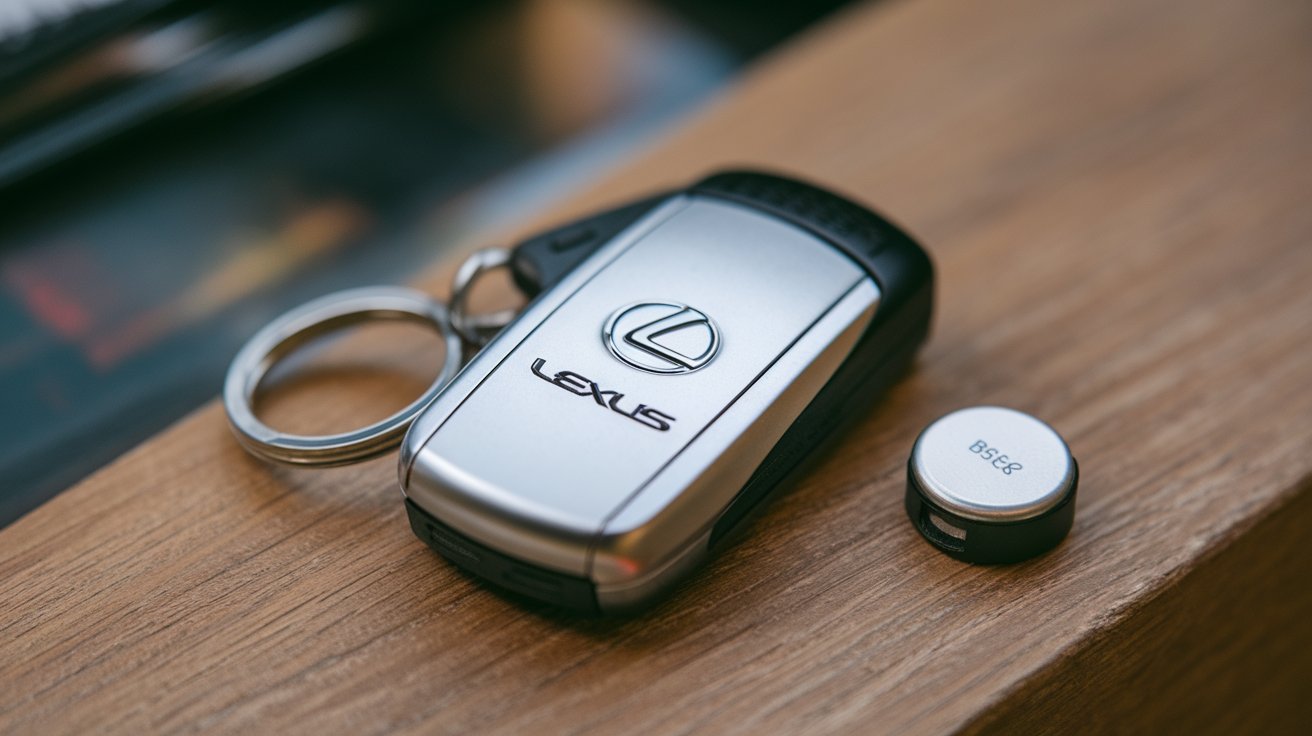
A Lexus key fob battery is a small but essential component of the vehicle’s SmartAccess and remote functions. When the battery becomes weak, owners may notice reduced operating range, inconsistent locking and unlocking, or a warning indicating that the key battery needs attention.
Modern Lexus vehicles use sophisticated electronic key systems, and the exact key-fob design and battery specification can vary by model, model year and key type. Lexus documentation also confirms that SmartAccess operation can be affected when the key battery is depleted.
Replacing a Lexus key fob battery is generally a straightforward maintenance task, but selecting the correct battery and installing it carefully are important. This 2026 guide explains what Lexus owners should know about battery replacement, warning signs, troubleshooting and key-fob care.
What Is a Lexus Key Fob Battery?
The Lexus key fob battery supplies the electrical power needed for the buttons and wireless functions built into the electronic key. Depending on the vehicle and key design, the fob may control functions such as locking, unlocking, opening the trunk, panic operation and remote-start features.
Lexus SmartAccess systems are designed to provide convenient access to the vehicle without requiring the traditional mechanical key to be inserted into a lock. When the key-fob battery becomes weak, communication between the key and vehicle can become less reliable.
Lexus also provides connected-service information that can include SmartAccess key battery status in the vehicle health report on supported vehicles and services.
It is important to distinguish the key fob battery from the vehicle’s 12-volt battery or hybrid traction battery. The small battery inside the remote powers the key itself and is not the same component that powers the vehicle.
Signs Your Lexus Key Fob Battery Is Weak
Several symptoms can indicate that a Lexus key battery replacement is becoming necessary.
One of the most obvious signs is a shorter operating range. You may need to stand closer to the vehicle before the lock or unlock button responds.
Other common symptoms include:
- Buttons work intermittently
- Locking or unlocking takes several attempts
- The vehicle displays a key battery warning
- The remote-start function becomes unreliable
- The vehicle has difficulty detecting the electronic key
- The key works only when it is very close to the vehicle
Lexus documentation for remote-start-equipped vehicles specifically notes that key-fob battery strength can affect operating range.
A weak key battery does not necessarily mean the entire key has failed. In many cases, replacing the small internal battery restores normal remote operation.
How to Find the Correct Lexus Key Fob Battery
One of the most important parts of the replacement process is choosing the correct battery specification.
There is no single battery that should automatically be assumed to fit every Lexus key fob. Lexus has used different key designs across different generations and markets, so the safest approach is to check the vehicle owner’s manual, existing battery marking or Lexus parts information for the exact key.
Before purchasing a replacement, check:
- The Lexus model and model year
- The design of your key fob
- The identification printed on the existing battery
- The owner’s manual’s battery specification
- Compatibility information from Lexus or an authorized dealer
Avoid choosing a battery based solely on the vehicle’s model name. Two Lexus vehicles—or even different key versions for the same vehicle—can potentially use different battery specifications.
For owners who want additional assistance, Lexus dealers can identify the correct part using vehicle and key information.
How to Replace a Lexus Key Fob Battery
The exact procedure depends on the key-fob design, so the owner’s manual should take priority over a generic procedure. However, many Lexus electronic keys are designed with a removable mechanical key and a housing that can be carefully separated.
A typical replacement process involves these general steps:
1. Prepare the replacement battery
Obtain the correct battery type before opening the key. Keep the new battery clean and avoid touching its surfaces unnecessarily.
2. Remove the mechanical key
Many Lexus SmartAccess fobs have a small release mechanism that allows the mechanical key to slide out of the housing.
3. Open the key-fob case
Use the mechanical key or an appropriate small tool according to the instructions for your particular fob. Work gently to avoid damaging the plastic housing or internal components.
4. Remove the old battery
Pay attention to the battery’s positive and negative orientation before removing it. Take note of how the original battery sits in its holder.
5. Install the new battery
Place the replacement battery into the holder in the same orientation as the original. Make sure it sits securely and that the contacts are properly positioned.
6. Reassemble the fob
Carefully close the housing until it is properly seated. Reinstall the mechanical key if it was removed.
7. Test the key
Stand near the vehicle and test the lock, unlock and other available functions. If your Lexus has additional remote features, test those as well.
If the key still does not operate correctly, the problem may involve something other than the battery.
What Happens If the Lexus Key Fob Battery Dies?
A completely depleted battery can prevent normal wireless communication between the key fob and Lexus SmartAccess system.
Lexus documentation notes that SmartAccess may not function when the key battery is depleted.
However, this does not necessarily mean you are permanently locked out of your vehicle. Lexus SmartAccess keys generally incorporate a mechanical key that can provide an alternative method of entering the vehicle.
Depending on the vehicle, there can also be an emergency method for starting or recognizing the key when the electronic key battery is weak. Because procedures differ between Lexus models, drivers should consult the specific owner’s manual for the correct emergency-start procedure.
Keeping a spare key available is also a sensible precaution, particularly if you regularly travel long distances.
Lexus Key Fob Battery Problems After Replacement
Sometimes a new battery does not immediately solve the problem. If the key remains unreliable, check several possibilities.
First, confirm that the replacement battery is the correct type and specification. Next, check that it was installed in the correct orientation and that the battery is making proper contact with the terminals.
Also inspect the key housing for damage. A dropped or damaged fob can develop problems unrelated to the battery.
If the vehicle has trouble recognizing the key even after installing a fresh battery, consider whether the issue could involve the vehicle’s SmartAccess system, key programming, receiver or another electronic component.
Lexus connected-service systems can provide vehicle health information, including SmartAccess key battery status on supported vehicles.
If basic battery replacement does not resolve the issue, a Lexus dealer or qualified automotive professional can diagnose the key and vehicle.
How to Make Your Lexus Key Fob Battery Last Longer
Proper handling can help reduce unnecessary battery drain and protect the electronic key.
Keep the fob away from excessive heat, moisture and physical damage. Avoid leaving it in locations where it can repeatedly be pressed against objects, because accidental button activation can consume battery power.
If your Lexus supports remote-start functionality through the key fob, remember that battery condition can affect its operating range.
It is also useful to keep the spare key in good condition rather than waiting until it is needed during an emergency.
Regularly checking the key’s operation can help identify a weakening battery before it becomes completely depleted.
Lexus Key Fob Battery Replacement Cost and Maintenance
The cost of replacing a Lexus key fob battery is usually much lower than replacing the entire electronic key. The battery itself is a small maintenance item, while a complete replacement key can be considerably more expensive because it may involve programming and vehicle-specific equipment.
Owners who replace the battery themselves generally only need the correct replacement battery and, depending on the design, a suitable small tool. A Lexus dealer can also perform the replacement if the owner prefers professional service.
Because battery specifications vary, it is better to confirm the exact requirement than to purchase a battery solely because it is commonly associated with Lexus keys.
Final Thoughts on Lexus Key Fob Battery Replacement
A Lexus key fob battery may be small, but it plays an important role in the daily convenience of SmartAccess and remote functions. Reduced range, inconsistent button operation and battery warnings are useful signs that replacement may be necessary.
The most important step is choosing the correct battery for your specific Lexus key. After carefully replacing it and confirming the correct orientation, test the key’s functions before relying on it for everyday driving.
If a fresh battery does not restore normal operation, the issue may involve the key itself or the vehicle’s SmartAccess system. In that situation, consulting the Lexus owner’s manual or an authorized Lexus service provider is the safest approach.
With simple preventive maintenance and attention to warning signs, Lexus owners can keep their electronic keys working reliably throughout 2026 and beyond.
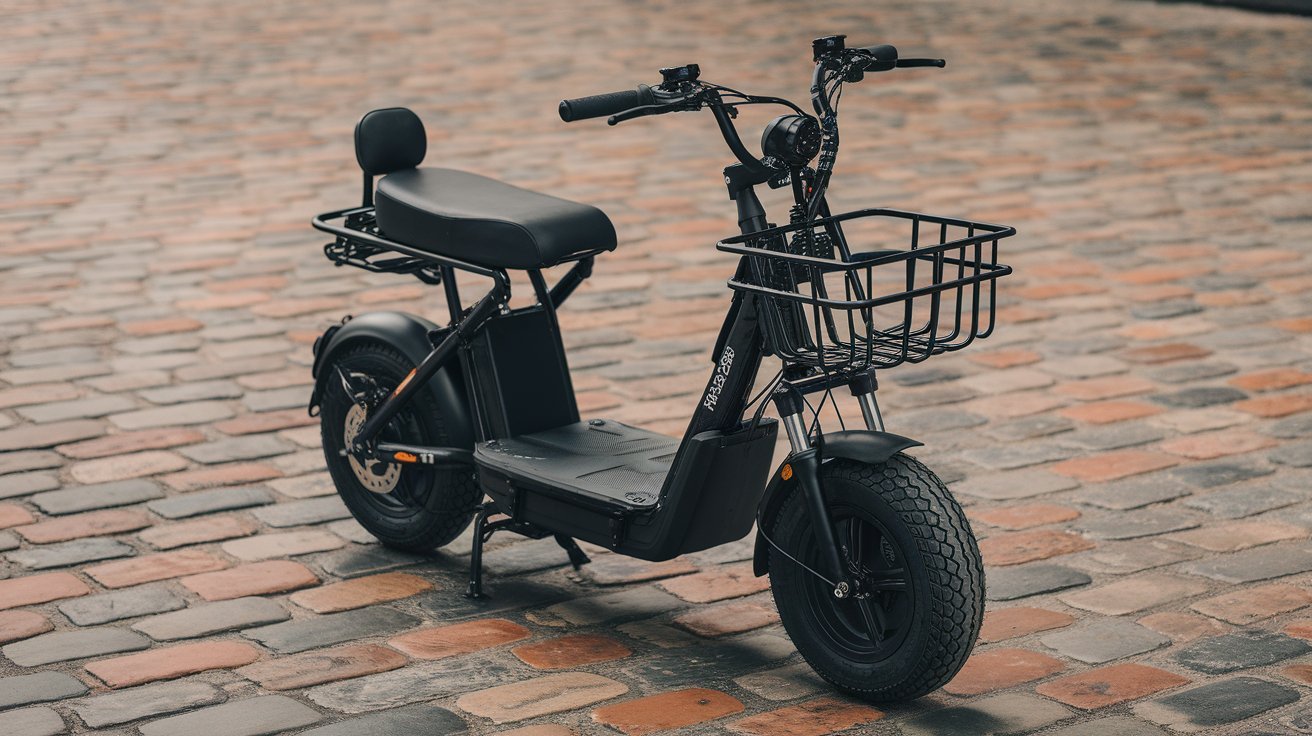
The Eskute C100-BK-SS is associated with the Eskute C100 city-style electric bike, a practical step-through e-bike designed around everyday transportation. The C100 has attracted attention for combining a comfortable urban design with useful commuter equipment, including a rear rack, mudguards, integrated lighting, and a removable battery. Independent reviews have described the original C100 as a budget-focused city e-bike, while Eskute’s current European range now prominently features the C100 Plus rather than the original C100.
Because product specifications can vary by market and model year, the exact meaning of the “BK-SS” suffix should be confirmed against the label, product listing, or documentation for the particular bike. The original C100 and newer C100 Plus should not be treated as identical products: Eskute’s current C100 Plus, for example, uses a 36V 13Ah battery and a 250W motor in its European specification.
What Is the Eskute C100-BK-SS?
The Eskute C100 is a city-oriented electric bicycle built primarily for commuting, errands, and everyday riding. Its step-through frame makes mounting and dismounting easier than on many traditional high-frame bicycles, while the practical equipment gives it a more complete commuter configuration.
The original C100 has been reviewed with a rear hub motor, 36V battery system, seven-speed Shimano gearing, integrated lights, mudguards, and a rear rack. One independent review described the bike as a functional budget e-bike with a strong emphasis on practical equipment.
This combination makes the C100 particularly relevant for riders who want an e-bike for ordinary urban journeys rather than a specialized mountain-bike platform. The riding experience is centered around pedal assistance, conventional bicycle controls, and useful accessories for day-to-day transportation.
Eskute C100 Specifications and Key Features
Specifications can differ between the original C100, regional versions, and the newer C100 Plus, so we should distinguish them carefully. Independent testing of the original C100 reported a 36V, approximately 374Wh battery and a rear hub motor, while the current European C100 Plus is officially listed with a 250W motor and 36V 13Ah battery.
The original C100’s practical specification is notable because it includes equipment that is sometimes optional on inexpensive e-bikes. Mudguards can be useful in wet conditions, the rear rack provides carrying capacity, and integrated lighting improves visibility when riding in lower-light conditions. The bike also uses a step-through frame, which suits riders who prioritize easy access.
The current C100 Plus specification is different. Eskute lists a 250W motor, 36V 13Ah removable battery, 26 × 2.1-inch tires, mechanical disc brakes, front suspension, integrated LED lights, and a maximum load of 120 kg for its European version.
Battery, Motor, Range, and Riding Performance
The battery is one of the most important components when evaluating an electric bike. The original C100 has been reported with a 374Wh-class battery, while the current C100 Plus increases capacity to 36V 13Ah, or 468Wh. Eskute currently advertises up to 80 km of assisted range for the European C100 Plus, although real-world range depends on rider weight, terrain, temperature, assistance level, tire pressure, wind, and riding conditions.
Independent testing of the original C100 produced a considerably shorter range under demanding conditions, demonstrating why advertised maximum range and real-world performance should not be confused. One review reported approximately 18 miles during a challenging test involving hills and cold-weather conditions.
Motor performance is similarly dependent on conditions. The original C100 was tested with a rear hub motor, while the current C100 Plus is officially specified with a 250W rear hub motor producing 45 Nm of torque in the European version.
For everyday flat or moderately rolling city routes, this type of setup can provide useful assistance without making the bicycle unnecessarily complicated.
Comfort, Brakes, Tires, and Practical Equipment
Comfort is a major part of the C100 concept. The step-through design makes getting onto the bike relatively convenient, while wider city tires can provide stability on ordinary paved roads. The newer C100 Plus adds an 80 mm front suspension fork and 26 × 2.1-inch tires, according to Eskute’s European specification.
The bike’s practical equipment is one of its strongest characteristics. The rear rack can be useful for carrying everyday items, while mudguards help reduce water and road debris reaching the rider. Integrated lighting is also valuable for visibility.
Braking specifications should be checked for the exact model. Eskute’s current C100 Plus lists mechanical disc brakes, while reviews of the original C100 have highlighted braking as an area where the budget-focused design has limitations.
This reinforces an important point: a product name alone is not enough to determine every component. Model year, market, and exact configuration matter.
Original Eskute C100 vs. C100 Plus
The distinction between the original C100 and C100 Plus is particularly important in 2026. Eskute’s own comparison describes the standard C100 with a 36V 10.4Ah battery and an estimated 50–60 km range, while the C100 Plus uses a 36V 13Ah battery with an estimated 70–80 km range in that comparison. Both are listed with 250W motors and a 25 km/h EU-oriented specification in the comparison.
Eskute’s current product page for the European C100 Plus now gives an 80 km assisted range, 250W motor, 36V 13Ah battery, 26 × 2.1-inch wheels, mechanical brakes, front suspension, and 120 kg maximum load.
Therefore, anyone searching specifically for Eskute C100-BK-SS should verify whether the listing refers to the original C100, a regional configuration, or a C100 Plus variant before relying on specifications or purchasing information.
Is the Eskute C100 Suitable for Everyday Commuting?
For the right type of rider, the C100’s biggest advantage is its emphasis on practical urban transportation. Rather than concentrating exclusively on speed or off-road performance, the design includes features that make sense for commuting: a step-through frame, rack, lights, mudguards, multiple gears, and electric assistance.
Independent reviewers have generally recognized the C100 as a budget-oriented practical e-bike, while also pointing out compromises involving weight, range, and performance on steep terrain.
For short city trips and relatively flat routes, those compromises may be less significant. For long-distance riding, very steep hills, or riders who require particularly high performance, a larger-battery or more powerful model may be more appropriate.
Frequently Asked Questions About Eskute C100-BK-SS
What is the Eskute C100-BK-SS?
The term is associated with the Eskute C100 electric city bike, although the exact “BK-SS” designation should be checked against the specific product label or listing because Eskute has produced different configurations and newer C100 Plus models.
What battery does the Eskute C100 use?
The original C100 has been reported with a 36V battery around 10.4Ah/374Wh, while the current European C100 Plus uses a 36V 13Ah battery.
What is the range of the Eskute C100?
Range varies significantly according to the exact version and riding conditions. Eskute’s comparison gives the original C100 an estimated 50–60 km, while the C100 Plus is listed at higher figures; real-world independent testing can be lower under demanding conditions.
Does the Eskute C100 have a rear rack?
Yes. The original C100 has been reviewed with a rear rack, making it particularly practical for commuting and carrying everyday items.
Is the C100 a mountain bike?
The C100 is primarily a city and commuter e-bike. Its equipment and geometry are aimed at everyday transportation rather than demanding mountain-bike riding.
What should we check before buying an Eskute C100-BK-SS?
We should verify the exact model year, battery capacity, motor specification, brakes, wheel size, included accessories, regional legal specification, warranty, and availability of replacement parts. Eskute’s current product range has evolved, so older C100 specifications should not automatically be applied to the C100 Plus.
Conclusion
The Eskute C100-BK-SS is best understood in the context of the Eskute C100 family of practical city electric bikes. The original C100 combines electric assistance with commuter-focused features such as a step-through frame, rear rack, mudguards, integrated lights, gears, and a removable battery. Independent reviews have found it to be a functional budget e-bike while also identifying compromises in areas such as range, weight, and performance on demanding climbs.
In 2026, it is particularly important to distinguish the original C100 from the C100 Plus, which has a larger 36V 13Ah battery and updated equipment in Eskute’s European specification.
For anyone researching the Eskute C100-BK-SS, the safest approach is to confirm the exact configuration rather than relying on a generic C100 specification. That ensures the battery, motor, range, brakes, accessories, and other features match the specific bicycle being considered.

//TurboGeek.org is a search phrase that points toward TurboGeek.org, a technology-focused website covering subjects connected with gaming, gadgets, software, artificial intelligence, cybersecurity, digital trends, and emerging technologies. For readers searching for information about the platform in 2026, understanding its purpose, content categories, and audience provides a useful starting point.
TurboGeek presents itself as a publication operating at the intersection of gaming culture and technology. Its stated coverage includes video games, gadgets, technology news, reviews, and in-depth features. The platform is designed for readers who want to follow developments in digital entertainment while also learning about broader technology trends.
What Is //TurboGeek.org?
TurboGeek.org is a technology and gaming website that publishes articles covering a wide range of digital subjects. Its About page describes the platform as a place where gaming and technology meet, with content extending from games and gaming culture to gadgets and emerging technological developments.
The site’s broad editorial direction makes it relevant to different types of readers. Gamers can explore articles related to video games, platforms, mobile gaming, and game development. Technology enthusiasts can find material related to AI, applications, cybersecurity, hardware, digital services, and emerging innovations.
This combination is important because gaming and technology are increasingly interconnected. Modern games depend on powerful processors, graphics systems, networking infrastructure, software engines, cloud technologies, and artificial intelligence. At the same time, gaming continues to influence hardware and software innovation.
Rather than treating these subjects as completely separate categories, TurboGeek brings them together within one digital publication.
Gaming Content on TurboGeek.org
Gaming is one of the most visible areas of TurboGeek.org. The platform’s stated editorial focus includes video games ranging from independent productions to major AAA releases.
Gaming content can serve several purposes. Readers may be looking for information about a new release, practical gameplay guidance, technology behind modern games, industry developments, or discussions about gaming culture.
The gaming industry has changed considerably over the past decade. Players now interact with games through consoles, computers, smartphones, cloud services, and increasingly sophisticated online platforms. Games are also connected with streaming, esports, social communities, digital marketplaces, and creator ecosystems.
This means modern gaming coverage can go far beyond simple game reviews. Readers may want to understand graphics technology, game engines, online connectivity, storage requirements, controller technology, performance optimization, and security.
TurboGeek’s technology-oriented perspective can make these connections particularly relevant for readers who are interested in both playing games and understanding the technology behind them.
Technology, Gadgets, and Emerging Trends
Technology is another central part of TurboGeek’s identity. The site describes its coverage as including gadgets, technology news, reviews, and in-depth features.
Technology readers in 2026 face an unusually fast-moving environment. Artificial intelligence continues to influence software and digital services, while advances in processors, displays, mobile devices, networking, storage, and automation continue to change consumer technology.
Gadget coverage can help readers understand how new devices work and whether a particular innovation has meaningful practical benefits. A useful technology article should go beyond specifications and explain how a product or development affects everyday users.
For example, a new device might introduce a faster processor, improved battery technology, enhanced connectivity, or AI-powered features. The important question is not simply whether the specification is impressive but what practical difference it makes.
This approach is particularly valuable for consumers who want to understand technology before making purchasing decisions.
AI, Cybersecurity, and Digital Innovation
One of the most important technology areas in 2026 is artificial intelligence. AI is influencing content creation, software development, customer service, search, productivity tools, gaming, cybersecurity, and countless other digital applications.
Technology publications can help readers understand these developments by explaining terminology and focusing on real-world applications rather than relying entirely on technical language.
Cybersecurity is equally important. As more personal, professional, and financial activity moves online, users need to understand risks involving passwords, phishing, malicious software, account security, privacy, and data protection.
TurboGeek’s broader technology coverage includes topics related to digital security and other emerging areas, demonstrating how its content extends beyond entertainment into practical technology subjects.
For readers, this combination can be useful because technology knowledge increasingly affects everyday decisions. Understanding how AI works, recognizing suspicious online activity, and knowing how to protect digital accounts are no longer concerns limited to technology professionals.
Why TurboGeek.org Is Relevant in 2026
The technology landscape changes quickly, which makes current and understandable information particularly valuable. A device released today can introduce features that were uncommon only a short time ago. Gaming platforms can change through software updates, while AI capabilities continue to develop at a rapid pace.
TurboGeek.org is relevant to this environment because its stated mission is centered on covering gaming and technology together.
The intersection of these fields creates numerous opportunities for readers. Someone researching a new gaming laptop may need information about processors and graphics hardware. Someone interested in mobile gaming may need to understand smartphone performance and network connectivity. Someone following game development may want to learn about AI or modern development tools.
A technology and gaming publication can therefore act as a bridge between technical developments and practical user experiences.
How to Get the Most From TurboGeek.org
Readers can make their experience more useful by approaching the site according to their interests. Someone primarily interested in gaming can focus on gaming-related content, while a technology enthusiast can explore articles covering gadgets, AI, software, cybersecurity, and emerging trends.
When reading technology articles, we should distinguish between general information and time-sensitive details. Product specifications, prices, software capabilities, and availability can change. Before making an expensive purchase, it is sensible to confirm important details through current manufacturer information and other reliable sources.
The same principle applies to gaming guides. Games can change through patches, updates, expansions, and balance adjustments. Advice that was accurate previously may not always remain current.
The best use of a technology website is therefore as an information and discovery resource, combined with careful verification when a decision depends on current specifications or rapidly changing information.
TurboGeek.org and the Future of Digital Content
The future of technology publishing will increasingly involve subjects that overlap with one another. Gaming, AI, mobile technology, cybersecurity, software, hardware, and digital entertainment are becoming part of one larger ecosystem.
For this reason, websites such as TurboGeek.org can appeal to readers who do not want to limit themselves to one narrow technology category.
The growth of AI-powered gaming, cloud gaming, advanced graphics, connected devices, virtual environments, and increasingly sophisticated digital services will create new topics for technology publishers to explore.
Readers will also expect more than simple announcements. They will want explanations of what changed, why it matters, who benefits, what the limitations are, and how the development can be used in real life.
This creates an opportunity for technology-focused publications to provide context rather than merely repeating headlines.
Frequently Asked Questions About //TurboGeek.org
What is TurboGeek.org?
TurboGeek.org is a website focused on gaming and technology, with coverage including video games, gadgets, technology news, reviews, and in-depth features.
What topics does TurboGeek cover?
Its coverage includes gaming as well as broader technology subjects such as gadgets, AI, software, cybersecurity, digital trends, and emerging technologies.
Is TurboGeek only about video games?
No. Gaming is an important part of the platform, but its editorial focus also extends to technology and digital innovation.
Why are gaming and technology covered together?
Modern gaming relies heavily on technology, including graphics processors, networking, software engines, storage, AI, and cloud infrastructure. The two areas therefore naturally overlap.
Should we verify information before buying technology?
Yes. Product prices, specifications, compatibility, and availability can change. We should check current official specifications and other reliable information before making significant purchases.
Conclusion
//TurboGeek.org represents a digital publication centered on the increasingly close relationship between gaming and technology. Its stated coverage includes video games, gadgets, technology news, reviews, and in-depth features, creating a broad information space for gamers and technology enthusiasts.
In 2026, this combination is particularly relevant. Artificial intelligence, cybersecurity, advanced hardware, mobile technology, cloud services, and gaming innovation continue to reshape the digital world.
For readers, the value of a platform such as TurboGeek lies in discovering new developments and understanding how they connect to everyday digital experiences. Whether the interest is gaming, gadgets, AI, cybersecurity, or emerging technology, clear and practical information can make complex developments easier to understand.
Anyone searching for //TurboGeek.org can therefore view the platform as a technology and gaming destination where digital entertainment and technological innovation come together.

Lexus Key Fob Battery: Replacement, Signs, Cost and Complete 2026 Guide

BMW M440i Gran Coupe 2026: Performance, Features, Interior, and Specifications

Charlie Kirk Shooting YouTube: What the Videos Show and How to Verify Information

Samantha Struthers Rader: Biography, Career, Family, and the Inspiring Journey of Dr. Sam

Stacie Zabka: Everything You Need to Know About William Zabka’s Wife

Ryan Kiera Armstrong: Biography, Movies, TV Shows, Career, Family, and Latest Updates (2026 Guide)
 News3 months ago
Samantha Struthers Rader: Biography, Career, Family, and the Inspiring Journey of Dr. Sam
- celebrity3 months ago
Stacie Zabka: Everything You Need to Know About William Zabka’s Wife
- celebrity2 months ago
Ryan Kiera Armstrong: Biography, Movies, TV Shows, Career, Family, and Latest Updates (2026 Guide)
- celebrity2 months ago
Brecken Merrill Parents: Everything About His Family Background, Childhood, and Support System
- celebrity2 months ago
Priscilla Love Vanwinkle: Biography, Background, Family Connections, and Personal Story
- celebrity2 months ago
Imogen Lucie Age: Biography, Career, Height, Family, Net Worth, and Social Media (2026 Guide)
- Blog2 months ago
@RedandWhiteMagz.com: A Complete Guide to the Digital Magazine and Blog in 2026
- celebrity3 months ago
Caleb James Goddard: Everything You Need to Know About Jack Nicholson’s Son